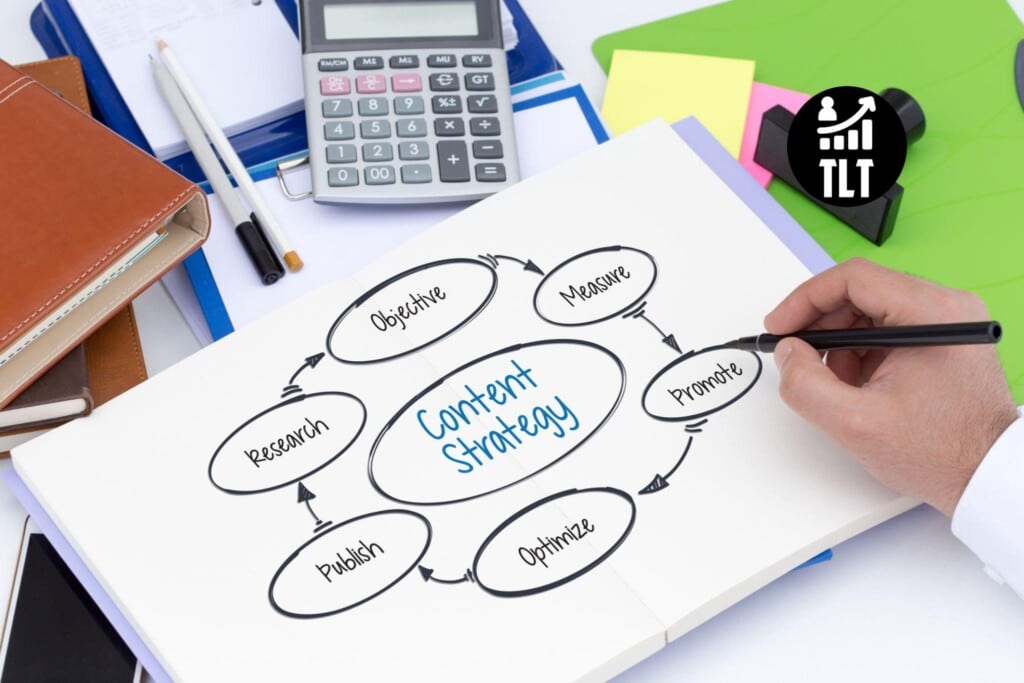
In an era powered by digital technology, content has become the heart of every business strategy. Your online presence, brand reputation, customer engagement, plus ultimately your conversion rates depend largely on the quality of your content.
This is where a well-thought-out “Content Strategy” comes into play.
Through this post, we’ll explore the fundamentals of creating a top-level content strategy to attract and engage your target audience.
>>>Related post: Writing Your First Content Strategy<<<
What is a Content Strategy?
Content strategy is the systematic process of planning, creating, distributing, along with managing content.
It’s not just about creating random pieces of content; it’s about designing a strategic roadmap that aligns your content with your business goals plus target audience’s needs.
A content strategy includes everything from the tone of your content, the platforms you’ll use for distribution, to the team that will manage your content operations.
However, the key to success is to also know how to assess the success of your content marketing efforts, then adjust accordingly.
It’s usually at the testing along with reevaluating then implementing stage that your competition will fall off, so imagine the power of getting this part correct for your own business.
Why is a Content Strategy Important?
The importance of a content strategy cannot be overstated. Here’s why:
1. Aligns Content with Business Goals: A content strategy ensures your content aligns with your business goals and communicates your brand values accurately.
2. Enhances User Engagement: By understanding your audience and crafting content that resonates with them, you can boost engagement rates.
3. Improves SEO: A good content strategy considers SEO, helping your brand gain visibility in search engine results plus driving organic traffic.
4. Streamlines Content Creation and Distribution: A content strategy provides a roadmap for your content creation and distribution process, saving time plus resources.
5. Measure Success: With a content strategy, you can define key performance indicators (KPIs) then measure the success of your content efforts.
Steps to Creating a Robust Content Strategy
Now, let’s dive into the steps involved in planning and creating a content strategy to attract plus engage your target audience.
1. Define Your Goals
The first step in developing a content strategy is defining your goals. What do you want to achieve with your content?
Whether it’s boosting website traffic, increasing brand awareness, generating leads, or improving conversion rates, your goals will guide your content strategy.
2. Understand Your Audience
Next, you need to understand your audience. Who are they? What are their interests, needs, along with pain points?
You can conduct surveys, analyze social media trends, or use Google Analytics to get insights into your audience demographics plus behavior.
3. Conduct a Content Audit
A content audit involves reviewing all the content you’ve created so far to identify what’s working along with what’s not.
This will help you understand what type of content resonates with your audience, plus what you need to improve or eliminate.
4. Plan Your Content
Once you’ve gathered all the necessary insights, it’s time to plan your content.
This includes deciding what type of content to create (blogs, videos, infographics, etc.)
What topics to cover, what tone to use, and when and where to publish your content.

5. Create and Distribute Your Content
Now comes the action part.
Create your content keeping in mind the SEO best practices.
Once the content is ready, distribute it through the right channels.
This could be your website, social media platforms, email newsletters, or other mediums where your audience is likely to engage.
6. Measure and Optimize
Lastly, measure the performance of your content using the KPIs defined at the start.
Analyze what’s working and what’s not, plus optimize your content strategy accordingly.
Examples of Successful Content Strategies
To understand the power of a well-planned content strategy, let’s look at a couple of examples:
1. HubSpot: HubSpot is a prime example of how a strategic content approach can drive success.
Their content strategy revolves around creating valuable, educational resources for their target audience, which primarily consists of marketers plus salespeople.
They offer a variety of content formats, from blogs and e-books to webinars and courses, all aimed at solving their audience’s pain points.
2. Airbnb: Airbnb’s content strategy focuses on storytelling.
They use their blog to share inspiring stories of hosts and travelers, highlighting the unique experiences offered by Airbnb.
This not only engages their audience but also strengthens their brand identity.
Conclusion
In conclusion, a robust content strategy is crucial for any business to succeed in the digital arena.
It helps you align your content with your business goals, understand and cater to your audience’s needs, streamline your content operations, plus measure your success.
Remember, the key to an effective content strategy is consistency, creativity, along with continuous optimization based on insights.
To stay competitive, never stop learning about your audience, keep experimenting with different content types and distribution channels, plus always strive to provide value through your content.
With a well-planned content strategy, you’ll not only attract your target audience but also keep them engaged, fostering long-term relationships along with driving business growth.
>>>Related post: Writing Your First Content Strategy<<<
If you found this post, ”Content Strategy: Planning along with Creating Content to Engage Your Target Audience” helpful or interesting, please feel free to give it a share or like it, so others may find value in this post.
We will be happy to advise you along with answer any questions you may have.
Be it with Manual Social Media Management from our team of experts, at a lower cost and yet at a higher level of quality than any automation tools.
Or maybe you just need some professional website design or branding? We have you covered.
Book your FREE no-obligation quote today!
Our normal service area is Bridgend, however, we also cover Swansea, Port Talbot, Bryncethin, Sarn, Ogmore Vale, Maesteg, Llantwit Major, Cowbridge, Barry, Penarth, Dinas Powys and Cardiff.
We can also offer worldwide remote support, with competitive rates and friendly, professional service. We are here to help. Or simply start a live chat in the bottom right of this page and say hello 🙂
To our continued health and success, Eric – CEO Top Level Traffic – Web Design Bridgend.