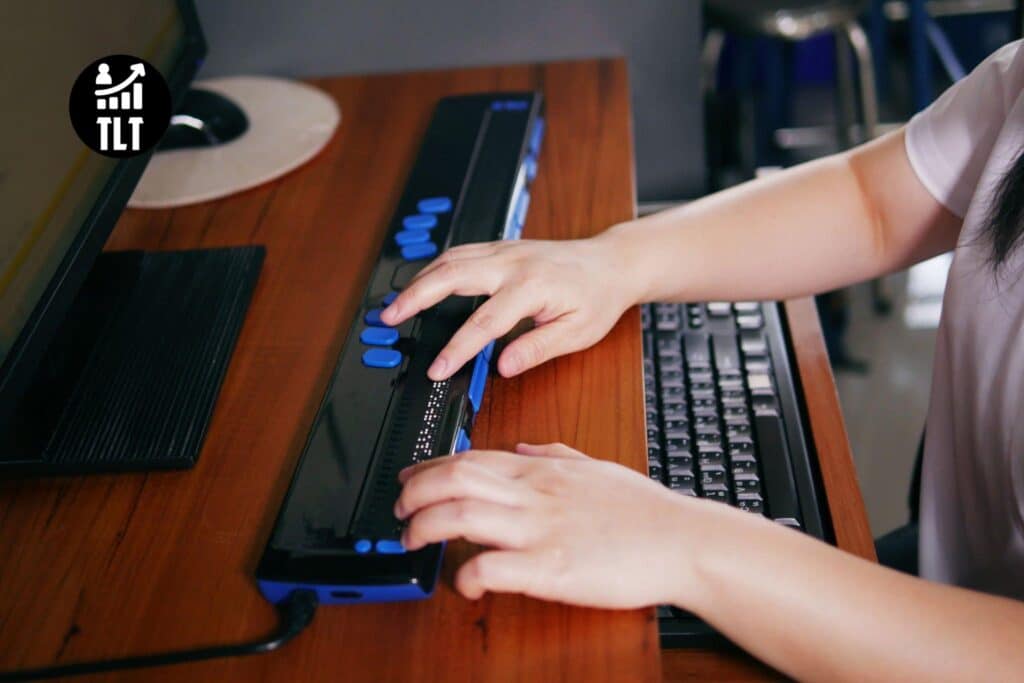
Have you ever wondered how a blind football fan reads the latest news about their favourite team? Or how is it possible for someone who is paralysed from the neck down to do their weekly grocery shopping online? Or even how a deaf person watching a stand-up comedy video is in hysterics? In two words, Web Accessibility.
Yes, that’s right! The web is accessible to people with disabilities, just like it is to people without disabilities.
It is, however, only possible if websites and mobile apps are designed and developed in a manner that takes different capabilities into account. Web accessibility plays a key role here.
>>>Related Post: The importance of having a mobile responsive website<<<
What is web accessibility?
“Web accessibility, or eAccessibility,[1] is the inclusive practice of ensuring there are no barriers that prevent interaction with, or access to, websites on the World Wide Web by people with physical disabilities, situational disabilities, and socio-economic restrictions on bandwidth and speed. When sites are correctly designed, developed and edited, more users have equal access to information and functionality.”
Credit to Wiki here
As mobile applications and other digital products are also subject to the same principles as web accessibility, we are really talking about digital accessibility.
It means ensuring that your website and mobile apps can be accessed by all people regardless of barriers, providing content that is accessible from all angles.
It means ensuring that your content doesn’t exclude people with visual, hearing, motor, or cognitive impairments.
In addition to improving usability for all users, not offering an accessible service may lead to legal trouble under the Equality Act 2010 (UK).
Just looking at permanent disabilities, let’s dive into the statistics:
-
- There are 13.3 million disabled people in the UK
-
- Colour blindness affects 8% of men and 0.5% of women
-
- Dyslexics make up 10% of the UK population
-
- There are more than 2 million blind people in the UK
-
- Hearing loss affects 19% of the UK population, of which 6.5 million are over the age of 60.
-
- There are 1.5 million people with learning difficulties in the UK
-
- UK citizens suffer from a lack of manual dexterity to the tune of 2.4 million
Web Accessibility: Making an accessible digital experience for everyone
The story doesn’t end there. People with disabilities aren’t the only ones who need accessibility. Everyone is involved.
When you find yourself in certain situations, whether temporary or permanent, you may have difficulty accessing websites on the web or mobile apps.
It is not uncommon for non-disabled users to take advantage of features designed specifically for disabled users, without realizing they are doing so.
I’ll give you an example from everyday life:
While at work, you stumble upon a video you really want to watch. There are no headphones in reach, and you don’t want to disturb your colleagues. So, what do you do? It’s caption time! This is a lifesaver in a sticky situation.
People with hearing impairments or dyslexia typically use captions in videos. Their understanding and interpretation of the video is dependent on captions. In noisy environments such as the bus, at work, or on the bus, have you ever relied on captions?
How would you fill out the expenses form if you have broken your arm, and the deadline is approaching, and you are having difficulty using a mouse? Rather than using a mouse, you rely on the keyboard to navigate.
You might even be part of the statistics who are suffering from a temporary disability if you have been injured or ill for a short while.
People with motor impairments who have difficulty using a mouse (e.g. repetitive strain injury) and people with visual impairments who use screen readers because they cannot see where to click on a screen rely heavily on keyboard navigation.
Keyboard navigation is not only used by people with disabilities, but also by others for convenience and efficiency, such as our team who have multiple posts to repeat for social media, for example.
It’s also imperative to remember that we all age. Invest in your future, not just in the present.
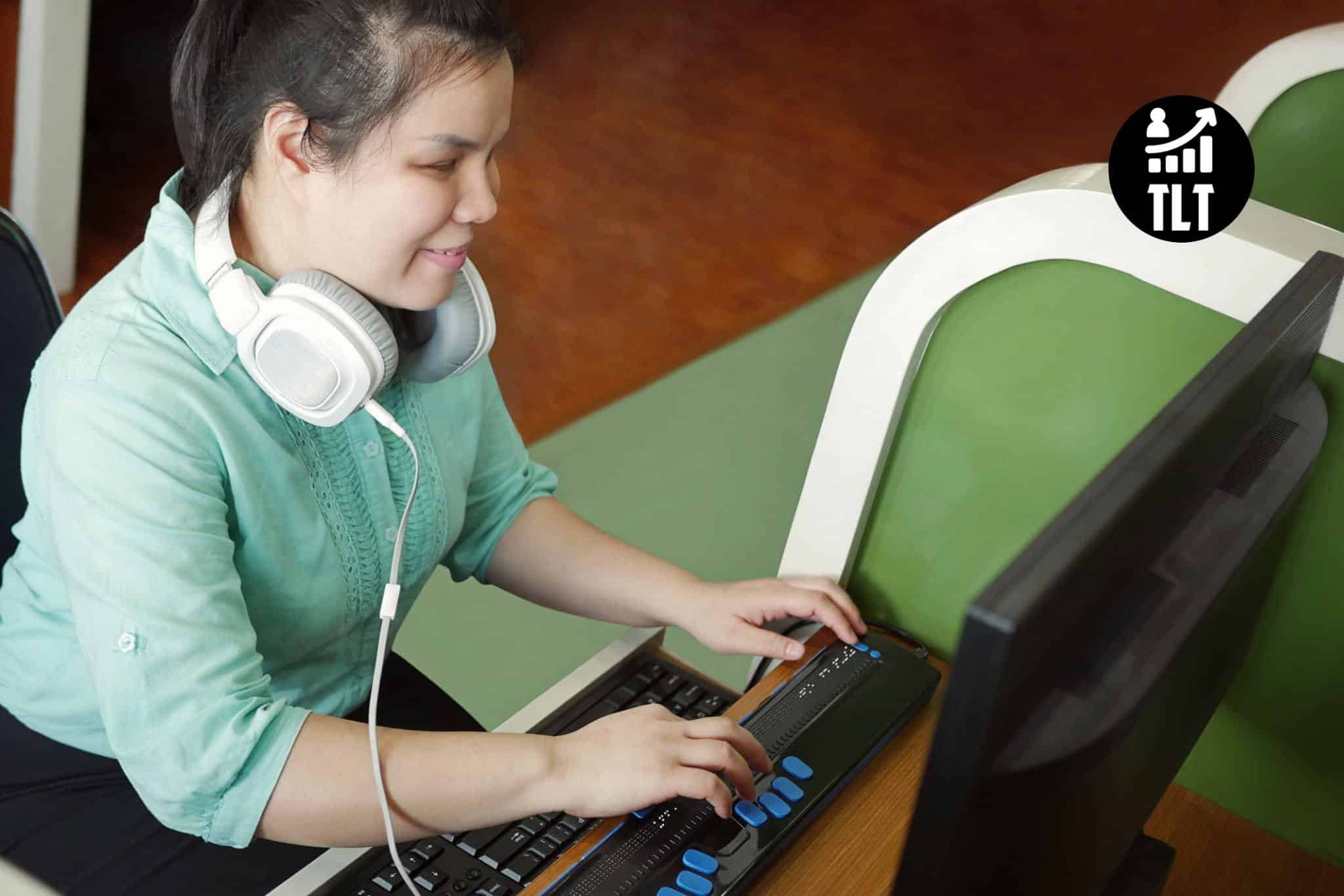
We should make digital accessibility a priority
The future belongs to digital, as technology is growing rapidly. The digital world is now a part of many businesses’ evolution and expansion. Online services are popular because they can be accessed from the comfort of people homes!
Reach out to as many people as possible! What’s the point of missing out on potential customers? Every year, disabled consumers spend £200 billion.
The following are some benefits of having an accessible website or mobile app:
-
- Complying with the UK’s Equality Act 2010 (there are similar laws in other countries) will lower your risk of legal action.
-
- As a result, you’ll create a positive impression of your business and may be able to set yourself apart from your competitors.
-
- Reaching out to people with disabilities will increase sales by 15 to 20%.
-
- Consider accessibility right from the start to save time and money.
-
- Usability is often improved by accessibility. Your website will be more likely to be visited again if your visitors have a smooth, hassle-free experience.
-
- You can improve your SEO by making your website accessible to search engines just as you would to blind users. You can kill two birds with one stone.
Guidelines for accessibility
How do you know if your website is accessible now that you know what accessibility means?
Testing it with people with disabilities, seeing how well it works, and improving it as needed would be ideal.
You can, however, use the Web Content Accessibility Guidelines 2.0 if you don’t have the time or budget. Building accessible websites is based on this international standard.
In order to address accessibility issues, designers and developers should follow these guidelines.
It may seem overwhelming, but the Web Content Accessibility Guidelines cover all aspects of accessibility issues that affect people with visual, hearing, motor, and cognitive impairments.
In the end, the evaluation is about whether people with disabilities are able to easily and effectively access your website and then understand the content writing. Here’s a quick check:
-
- Is it possible to navigate solely with a keyboard?
-
- Is it compatible with screen readers?
-
- When using a magnifier or zoom, is functionality and content still stable?
-
- How easy is it to understand?
An organization’s accessibility
Do you feel pumped up about digital accessibility? Would you like to shout and scream accessibility to everyone?
It is impossible for one person to be responsible for accessibility. Throughout your organization and projects, it’s a collective effort. When it comes to accessibility, different people play different roles.
-
- Owners of products
-
- Managers of projects
-
- Writers of content
-
- Testers
Don’t let accessibility gather dust on the backlog; start building accessibility into your projects at the beginning to save time and money.
Make sure it’s drilled in. Contact Top Level Traffic if you need assistance with your accessibility challenges or to have your website/mobile app evaluated for accessibility.
You can give us a call on +447511868660 if you are looking for a web designer with a proven track record of building websites for over 25 years with accessibility in mind.
>>>Related Post: The importance of having a mobile responsive website<<<
If you found this post, “What Is Web Accessibility?” helpful or interesting, please feel free to give it a share or like it, so others may find value in this post.
We will be happy to advise you along with answer any questions you may have.
Be it with Manual Social Media Management from our team of experts, at a lower cost plus at a higher level of quality than any automation tools.
Or maybe you just require some professional website design or branding? We have you covered.
Book your FREE no-obligation quote today!
Our normal service area is Bridgend, however, we also cover Swansea, Port Talbot, Bryncethin, Sarn, Ogmore Vale, Maesteg, Llantwit Major, Cowbridge, Barry, Penarth, Dinas Powys plus Cardiff.
We can also offer worldwide remote support, with competitive rates plus a friendly, professional service. We are always here to help 24/7.
Or simply start a live chat in the bottom right of this page to say hello 🙂
To our continued health plus success,
Eric Luis – CEO Top Level Traffic – Web Design Bridgend.